
Hire a Technician
Need immediate technical help? Provide your details below and our team will connect you with an available technician.
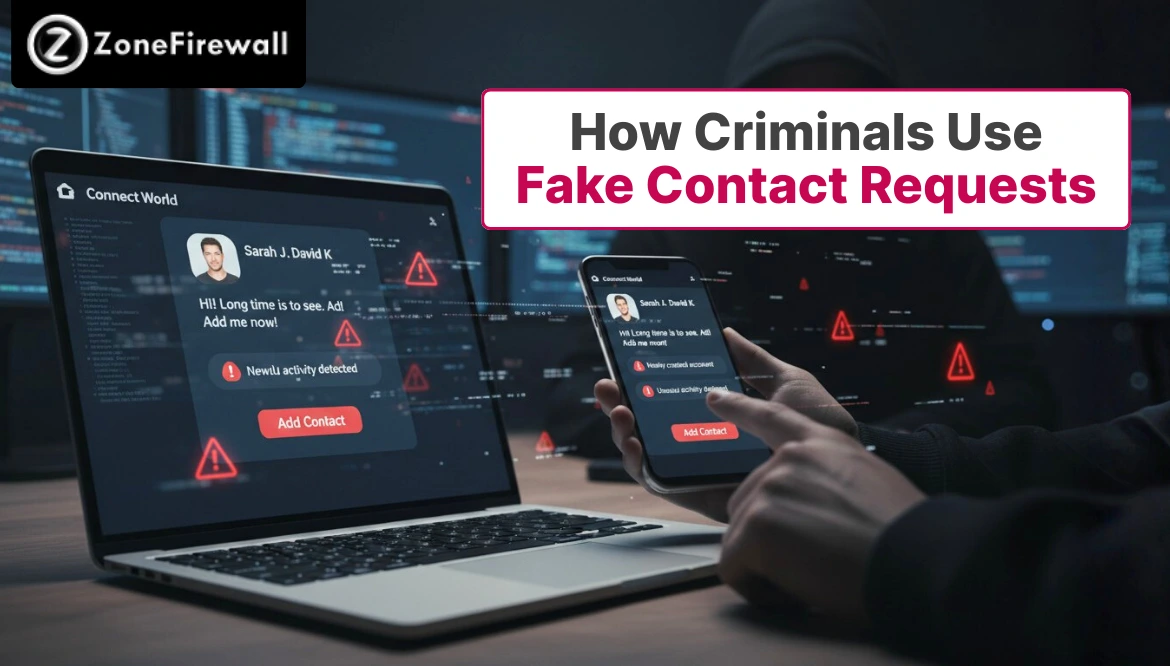
How Criminals Use Fake Contact Requests
Contact requests feel harmless. A name appears, a profile photo looks normal, and a short message feels polite. Many people accept contact requests without much thought, whether on social platforms, email, or messaging apps. Criminals rely on this habit. Fake contact requests act as the first step toward scams, data theft, and long-term misuse. Once accepted, criminals gain access to conversations, personal details, and trusted circles. This blog explains how fake contact requests work, why they succeed, and how you can stay alert before one click leads to serious trouble.
What Fake Contact Requests Really Are
Fake contact requests are messages sent by criminals pretending to be real people, businesses, or services. These requests aim to start a conversation, not to act immediately. Criminals know trust grows through small interactions.
Once accepted, they slowly gather details, study behavior, and decide the best way to exploit the connection. Some requests stay quiet for days or weeks. Others move fast. The goal stays the same: gain access without raising suspicion.
These requests appear on social platforms, professional networks, messaging apps, and even email contact lists. Familiar spaces make them feel safe.
Common Types of Fake Contact Requests
Fake contact requests come in different forms, but they all aim to start a conversation that feels normal and safe before moving toward misuse.
Impersonation Requests
Criminals pretend to be someone you know. They copy names and photos from public profiles. Once accepted, they claim a new account or phone number. The goal is to rebuild trust and ask for help, money, or details.
Business or Support Requests
These appear as company representatives or support teams. They mention issues, updates, or checks. The message sounds formal and urgent, which pushes quick replies.
Professional Networking Requests
Criminals pose as recruiters, partners, or clients. They target job seekers and small business owners. Conversations often lead to fake offers or document requests.
Interest-Based Requests
These target hobbies or groups. Criminals join forums or groups and send friendly requests. Shared interests make the connection feel genuine.
Random Friendly Requests
Some requests stay vague. A simple “Hi” or “Let’s connect” starts the conversation. Criminals then adapt based on responses.
How Criminals Build Trust After Acceptance
Once accepted, criminals rarely rush. They observe. Messages feel casual and polite. Small talk builds comfort. They may react to posts, ask simple questions, or share harmless stories. This slow pace lowers suspicion. Over time, they introduce problems, offers, or requests.
Trust builds because the connection feels normal. Criminals aim to become familiar before asking for anything risky.
Information Criminals Collect Quietly
Fake contacts collect details through conversation. Every reply gives clues. They notice routines, locations, job details, family names, and habits. Even harmless answers help build a personal profile.
This information helps craft believable stories later. Messages become more personal, which increases success. Many victims never realize how much they shared until misuse begins.
How Fake Contact Requests Lead to Scams
Fake contact requests rarely act alone. They open doors. Criminals may send links, files, or offers after trust forms. Some ask for help, claiming emergencies. Others introduce investment ideas or fake rewards.
Once the victim responds positively, criminals escalate. The contact request becomes the foundation for financial loss, account access, or identity misuse.
Warning Signs Hidden in Contact Requests
These warning signs often appear when a contact request is not genuine and should prompt you to pause before accepting or responding.
- New profiles with limited history
- Few real interactions or posts
- Vague introductions
- Requests that move conversations off the platform
- Pressure to respond quickly
One sign alone may seem harmless. Several together deserve caution.
Why Mutual Connections Do Not Always Mean Safety
Seeing shared contacts feels reassuring. Criminals exploit this. They hack or copy real accounts, then send requests using trusted names. Mutual connections lower doubt and speed acceptance.
Never rely only on shared contacts. Always check profiles, activity, and message tone. Familiar names do not guarantee real people.
Risks for Businesses and Professionals
Fake contact requests target businesses heavily. Criminals seek employees with access to data or payments. One accepted request can lead to fake invoices, false instructions, or leaked client details. Small teams face a higher risk because verification steps may feel unnecessary.
Professional trust can break fast. One mistake may affect clients, finances, and reputation.
How to Respond Safely to Contact Requests
Pause before accepting. Review profiles carefully. Look for history, real interactions, and clear details. If unsure, ask simple questions. Real people respond naturally. Criminals often avoid specifics. Use privacy settings to limit what new contacts can see. Control reduces risk without blocking communication completely.
What to Do If You Accepted a Fake Contact
Mistakes happen. Act early. Remove the contact, block the account, and report it. Review recent conversations for shared details. Change passwords if links or files were shared. Warn friends if impersonation is possible. Early action limits damage.
Final Thoughts
Fake contact requests succeed because they feel ordinary. Criminals hide behind friendly messages and familiar faces. By slowing down, checking profiles, and trusting instincts, you reduce risk. One careful moment can prevent long-term problems. Accept connections wisely. Not every request deserves access to your time, trust, or personal details.
FAQs
1. Are all contact requests from strangers unsafe?
No. Many real connections begin with strangers. Risk appears when profiles lack history, messages feel vague, or requests move quickly toward links or personal questions. Careful review matters more than avoiding all new contacts.
2. Why do criminals avoid asking for money right away?
Criminals build trust first. Quick requests raise suspicion. Slow conversations feel natural and reduce doubt. Once comfort forms, victims respond more easily to later requests involving links, files, or payments.
3. Can fake contact requests come from real accounts?
Yes. Criminals hack or copy real profiles. Messages may appear genuine at first. Always check writing style, recent activity, and unusual behavior, even from known names.
4. Should I report fake contact requests?
Yes. Reporting helps platforms limit future abuse. Blocking alone stops your contact, but reporting reduces risk for others. It also helps platforms identify patterns and remove harmful accounts faster.
5. How can businesses reduce fake contact risks?
Businesses should set clear communication rules, verify requests internally, and train staff to question unexpected messages. Simple checks prevent large losses and protect both data and trust.
Share
Tweet
Pin it
Announcement from ZoneFirewall LLC

Dear Valued Clients,
We’re excited to announce an important update to the way we offer our services at ZoneFirewall LLC. Starting October 1, 2025, we will be transitioning from custom pricing to two fixed service plans—designed to simplify your experience and bring more clarity to our pricing structure.
What’s New?
Advance Assistance — £249.99
Perfect for quick, on-demand support, this plan includes:
What You Will Get
- Help Desk Access (7 days / week)
- System Backup and Restore and Troubleshoots
- Printer Support and Troubleshooting Services
- Regular OS/ Application Update
- System Disk - Clean up & Tune Up
- Removal of Unwanted Apps & Files
- Application / Software Installation and Support
- Customised search queries for products
- Access to DIY Technical Content
- Incidental support for queries
- Virus & Malware Removal
- New Device Setup & Support (Phone/Tablet/SmartTV)
- Email setup & backup on local device
- Monthly Device Maintenance & Check-Up
Essential One Time Assistance — £99.99
Perfect for quick, on-demand support, this plan includes:
What You Will Get
- On Call Technical Assistance
- System Backup and Restore Services
- Printer and Wi-Fi Setup and Troubleshoot
- Operating System Troubleshooting & Support
- System Disk - Clean up & Tune Up
- Removal of Unwanted Apps & Files
- Application / Software Installation and Troubleshoot
- New Device Setup (Phone/Tablet/SmartTV)
- Email setup & backup on local device
- Incidental support for queries
Why the Change?
This shift is designed to:
- Increase pricing transparency
- Make service selection easier
- Eliminate surprises and hidden fees
- Maintain the high-quality support you expect
For Existing Clients
If you’re currently on a custom plan, you’ll continue under the existing terms until your agreement ends. After that, you can choose the plan that best suits your needs.
Need Help Choosing a Plan?
We’re here to help! Reach out by phone at +44-800-048-5987 or email us at billing@zonefirewall.co.uk with any questions.
Thank you for your continued trust in ZoneFirewall LLC. We look forward to supporting you with these new, streamlined service options.
Sincerely,
The ZoneFirewall LLC Team
zonefirewall.co.uk
+44-800-048-5987
billing@zonefirewall.co.uk